Pages

Showing posts with label Technology. Show all posts

Thursday, 16 March 2017

TAGGED UNDER:

Chase to acquire MCX mobile payments tech

JPMorgan Chase has acquired the technology behind failed merchant-backed mobile payment service CurrentC.
MCX, a QR code-based mobile wallet joint venture launched by big-ticket US retailers to take on Apple Pay and circumvent credit card fees, hit the buffers after one if its biggest proponents Walmart began the rollout of its own mobile payments service to nearly 600 stores in Texas and Arkansas in May last year. With Walmart going its own way, MCX announced the loss of 30 jobs and the postponement of plans for a nationwide roll-out in favour of forging relationships with major banks.

Chase - one of the first US banks to commit to the merchant venture - says the acquisition will help it to expand the availability of its own-branded Chase Pay service to a wider network of retail merchants.

“When we think about ‘fintech’, we go through a ‘build/buy/partner’ evaluation to decide how we can get to market most efficiently,” says Jennifer Roberts, head of Chase Pay. “MCX has been an important partner, and their technology complements ours, so we’re thrilled to deepen our relationships with the merchant community through the purchase of this technology. This will help us get to market faster.”

Chase Pay launched in November 2016 with a handful of initial merchants, including Best Buy. Other MCX merchants such as Walmart, Shell, Phillips 66, and Wakefern will enable Chase Pay as a payment option over the next year or more, she says.

TAGGED UNDER:

Southwest Airlines Is Saying Goodbye to Paper Tickets and Pneumatic Tubes

SKIFT TAKE

Southwest is the nation’s most consistently profitable airline, which is amazing considering the carrier has operated for years with antiquated technology. It’s finally updating its systems. There may be hiccups short-term, but over the long term, that should be good news for investors and customers.
— Rachel Bronstein
The pneumatic tubes and paper tickets have got to go.
In its 45 years of flying, Southwest Airlines Co. has been known for its lean operations and vaunted “20-minute turns” —the time between a jet getting to a terminal and pulling away for the next flight. The airline’s low-cost, no-frills, single-model fleet and mostly direct service meant Southwest didn’t need the tablet-toting mechanics, bag scanners for ramp workers and other technological advances that swept the industry.
That’s about to change as the airline says goodbye to its antiquated systems. Southwest is spending as much as $300 million to bring new technology to the airport ramp and other operations. That adds to the $500 million the airline has devoted to a new reservation system — the airline’s biggest tech update ever. Southwest expects to recoup its investments by 2020.
“We’re looking for minutes,” Chief Operating Officer Mike Van de Ven said in an interview. “How do I save a minute here, a minute there? In 2017, we are more deliberate in our continuous improvement efforts.”
Those efforts have become more critical over the past five years as Southwest has acquired another airline, begun flying larger planes, started overseas flights, built international terminals and expanded service at its home airfield in Dallas. The changes have added complexity, doubling the carrier’s turns to a costly 40 minutes. And this year, Southwest will add $700 million in expenses from two new labor contracts and a third under negotiation, according to a JPMorgan Chase & Co. estimate.
“Southwest’s approach was so successful for so long that it has taken them time to recognize where there’s room for improvement,” said Samuel Engel, aviation vice president at consulting firm ICF International. “Sometimes you look back and realize, ‘There have been innovations and we need to catch up.’” Southwest has been the second-best stock in the Dow Jones Transportation Average, and the best airline, with a 44 percent gain for the six months through Tuesday.

RESERVATION SYSTEM

The new domestic reservation system will replace 30-year-old technology this year, giving Southwest the same ability as rivals to accept foreign currency, recover faster from storms, and more easily change prices and schedules. Southwest also will be able to tighten the timing of flights for connecting passengers, which have increased 11 percent since 2012.
On the tarmac, mechanics and other workers will get tablets that receive real-time information so they can start addressing problems in the first five minutes of an aircraft’s turn. Other tools will let Southwest better match airport staffing to flight-schedule changes.
No longer will ramp personnel have to use pneumatic tubes — a technology that preceded the Wright Brothers’ first flight by about 50 years — to send notes in canisters about luggage and other cargo to workers who calculate critical jet weight and balance and carry the data back to the plane. Instead, the information will be sent electronically. Digital transmissions also will replace printouts for personnel who transport bags to and from planes. The upgrades will start rolling out this year, with more improvements through 2020, when they are expected to boost earnings about $100 million a year.

‘ADDED COMPLEXITIES’

“We’re pretty manual on the ramp,” Van de Ven said. “We have great capabilities, but added complexities. We have to be able to manage through them better.”
New technology had received a lower priority than initiatives like acquiring low-cost rival AirTran Airways in 2010, which put Southwest in Atlanta. The airline then turned to revamping its international and domestic reservation system before upgrading operations.
“It does add up over time,” said Savanthi Syth, a Raymond James Financial Inc. analyst. “It gives them scalability for future service. Southwest is definitely, more and more every day, looking more like a network carrier.”
The upgrades will give Southwest additional information to identify bottlenecks in getting passengers on and off planes. The airline already has added an exit stairway from the rear door to the tarmac on some jets. The procedure, in place at 13 airports, isn’t used at particularly congested cities or when the weather is bad.

PAPER TICKETS

And in May, the new reservation system will allow Southwest to get rid of its last paper tickets by issuing electronic versions to people traveling on employee guest passes. While the travel currently is booked online, the passengers need paper tickets, an irritating expense for transactions that don’t generate revenue.
In some ways, Southwest has been a victim of its own success. Its longer aircraft turnarounds in part came as the carrier added the Boeing Co. 737-800, the airline’s largest plane, to its 737-only fleet. The carrier also has begun traveling farther, flying fewer empty seats and, unlike many rivals, not charging for as many as two checked bags. Such factors mean more luggage on planes, increasing loading and unloading times.
“To be real blunt, up until about 2010 it all worked pretty well,” Van de Ven said, describing Southwest’s old-school ramp operations. “We had a fantastic run in terms of low costs, given the technical infrastructure we had, and we’re at that point that we need to make some investments.”

TAGGED UNDER:

Samsung likely to unveil foldable phone this year

Samsung is set to release a foldable handset later this year, according to some reports.
The unnamed smartphone was reportedly showcased to a limited number of partners the Mobile World Congress 2017 in Barcelona. The company is trying to prevent leaks; however, rumors about the South Korean giant mass-producing a few thousand units this year have already surfaced.
Samsung is likely to test waters by releasing the handset that’ll deliver “luxurious design and high-quality” to testers and partners in the third quarter of this year.
Features of the foldable handset will seemingly beat anything the company has done in the past, including its unreleased flagship handsets Galaxy S8 and Galaxy Note 8.
The phone that will reshape the ecosphere of the mobile industry, is expected to be officially announced later this year at the International Franchise Association 2017. After gauging demand for the product, mass-production will start in 2018. Some reports foresee the phone hitting the stores somewhere in 2018.  
The price and features apart from the foldable OLED display are unknown at this stage.  
Chinese mobile manufacturers including Lenovo and Oppo are ready to pose tough competition to the company, as rumours about companies working on producing foldable-handset prototypes have been making rounds in the tech ecosphere for a while now.
While American manufacturer Vevo has been reported to be working on a foldable handset, Apple remains notably absent from all such reports. However, according to ETNews, South Korean giant LG Display is considering the prospect of producing foldable screens for partners including Google, Microsoft, and Apple.

Wednesday, 8 March 2017

TAGGED UNDER:

Global reports of Microsoft faults

There are numerous reports from around the world that various Microsoft services are suffering faults.
The firm said it was looking into them.
Outlook users, including those with Hotmail addresses, are reporting issues on social media and sites including Down Detector - with some saying their services are now returning.
On the Xbox Live platform there is a message saying that Microsoft is aware of sign-in issues and is "working to resolve" them.
Microsoft Outlook has tweeted on its official account that the issue has now been fixed.
"Great news! An update has been rolled out. Our servers are now up and running," it said in response to a customer at around 1545 GMT.
It suggests trying to log in again.

TAGGED UNDER:

Wikileaks: CIA has tools to snoop via TVs

Wikileaks has published details of what it says are wide-ranging hacking tools used by the CIA.
The alleged cyber-weapons are said to include malware that targets Windows, Android, iOS, OSX and Linux computers as well as internet routers.
Some of the software is reported to have been developed in-house, but the UK's MI5 agency is said to have helped build a spyware attack for Samsung TVs.
A spokesman for the CIA would not confirm the details.
"We do not comment on the authenticity or content of purported intelligence documents," he said.
documents," he said.


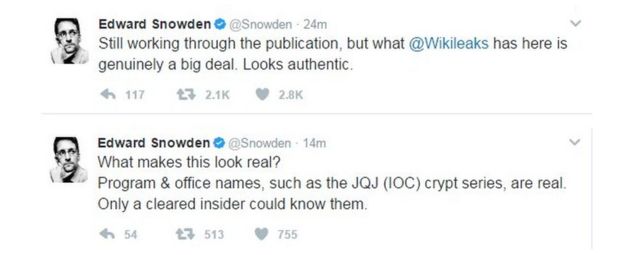
Edward Snowden tweetsImage copyrightTWITTER
Image captionWhisteblower Edward Snowden has tweeted that the leak appears to be authentic

A spokesman for the UK Home Office was unable to comment.
Wikileaks said that its source had shared the details with it to prompt a debate into whether the CIA's hacking capabilities had exceeded its mandated powers.

Embarrassment factor - Analysis by BBC's security correspondent Gordon Corera

These latest leaks - which appear to give details of highly sensitive technical methods - will be a huge problem for the CIA.
There is the embarrassment factor - that an agency whose job is to steal other people's secrets has not been able to keep their own.
Then there will be the fear of a loss of intelligence coverage against their targets who may change their behaviour because they now know what the spies can do.
And then there will be the questions over whether the CIA's technical capabilities were too expansive and too secret.
Because many of the initial documents point to capabilities targeting consumer devices, the hardest questions may revolve around what is known as the "equities" problem.
This is when you find a vulnerability in a piece of technology how do you balance the benefit to the public of telling the manufacturer so they can close it and improve everyone's security with the benefit to the spy agency of leaving it in place so they can exploit it to collect intelligence.
The NSA has already faced questions about whether it has this balance right when many of its secrets were revealed by Edward Snowden, and now it may be the CIA's turn.

Hacked TVs

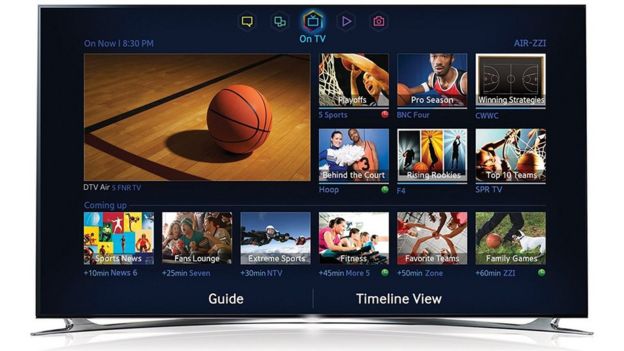
The effort to compromise Samsung's F8000 range of smart TVs was codenamed Weeping Angel, according to documents dated June 2014.
They describe the creation of a "fake-off" mode, designed to fool users into believing that their screens had been switched off.
Instead, the documents indicate, infected sets were made to covertly record audio, which would later be transferred over the internet to CIA computer servers once the TVs were fully switched back on, allowing their wi-fi links to re-establish.
Under a "future work" section, it is suggested that video snapshots might also be taken and the wi-fi limitation be overcome.


Samsung TVImage copyrightSAMSUNG
Image captionThe CIA is alleged to have found a way to listen to conversations that took place close to Samsung TVs

Samsung has not commented on the allegations.

Apple attacks

Wikileaks also claims that as of last year, the CIA has built up an arsenal of 24 Android "zero days" - the term given to previously unknown security flaws in code.
Some of these are said to have been discovered by the CIA, but others were allegedly obtained from the UK's GCHQ agency as well as the NSA and unnamed third-parties.
Devices made by Samsung, HTC and Sony, among others, were said to have been compromised as a result, allowing the CIA to read messages on Whatsapp, Signal, Telegram and Weibo among other chat services.
It is also claimed that a specialised CIA unit was set up to target iPhones and iPads, allowing the agency to see a target's location, activate their device's camera and microphone, and read text communications.
The unit is also reported to have made use of further iOS "zero days" obtained from GCHQ, the NSA and FBI.
"It is longstanding policy that we do not comment on intelligence matters," GCHQ told the BBC.
"Furthermore, all of GCHQ's work is carried out in accordance with a strict legal and policy framework, which ensures that our activities are authorised, necessary and proportionate."
Other claims say the CIA:
  • was trying to find ways to infect vehicles' computer control systems. Wikileaks claims these might have been used for undetectable assassinations
  • had found ways to infect "air-gapped" computers - machines that are not linked up to the internet or other insecure networks. Methods are said to have included hiding data in images or hidden parts of computer storage
  • had developed attacks against popular anti-virus products
  • had built up a library of hacking techniques "stolen" from malware developed in Russia and elsewhere
Wikileaks describes its release as the first in a series of planned leaks about the CIA's cyber-activities, which it refers to as Vault 7.
It added that the material had already circulated among hackers who used to work for the US government as well as contractors in an unauthorised manner.

Analysis: Mark Ward, Technology reporter


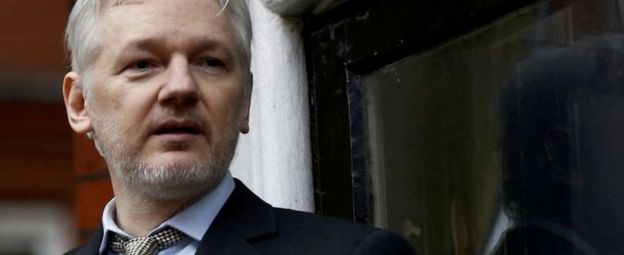
Julian AssangeImage copyrightREUTERS
Image captionWikileaks's founder Julian Assange said there was a cyber-weapon proliferation risk

There is a huge amount of information in the CIA data dump but a lot of it, such as its apparent success in compromising smart TVs, is not that surprising. Lone researchers have managed similar hacks, so smart government agents were always going to be able to go further.
Plus, we kind of know that a lot of the modern internet-of-things gear is broken as all kinds of holes have been found in all kinds of gadgets - including cars.
What's more interesting is the work said to have been done on iPhone and Android handsets. That's because Apple works hard to make sure iOS is secure and Google has made a real effort lately to secure its operating system. For a spy agency, access to those gadgets is key because they travel everywhere with a target.
What is likely to hit the CIA the hardest is losing control of all the zero day exploits and malware detailed in the papers.
It is more than likely that the agency paid millions to build up an arsenal of tools that are guaranteed to work - largely because they are based on flaws, bugs and vulnerabilities that have never been seen before. Operating systems of all stripes are really big haystacks and the information in some of the leaks looks like a good map to all the needles hiding within.
With the zero days now largely burned the CIA may have to re-trench for a while but it will doubtless have other unused attack tools stored and ready to deploy.
What's potentially more worrying is that as information about the bugs gets out then the bad guys will pile in and use them.
We saw that with the zero days released in the much smaller Hacking Team data breach, and there is much more useful data to be found in this trove.

Saturday, 4 March 2017

TAGGED UNDER:

Uber uses 'secret program' Greyball to hide from regulators

Uber has been using a secret program to prevent undercover regulators from shutting down the taxi-hailing service in cities around the world.
The software, called Greyball, sought to identify officials trying to catch its drivers and deny them service, the New York Times reports.
Uber has frequently been at odds with governments - and with competitors.
Greyball was used to secure early access to cities where its operations had not been authorised.
In most cases, local officials wanted to make sure the company was subjected to the same conditions of service required by the legislation.
The New York Times said existence of the Greyball program was confirmed by four current and former Uber employees, who were not named.
Greyball identified regulators posing as ordinary passengers, by collecting data on the location used when ordering a taxi and determining whether this coincided with government offices.
It also checked credit card information to establish whether the user is linked to an institution or law enforcement authority.
Uber, the report adds, even visited phone shops to trace smartphones bought by city officials setting up multiple accounts in an effort to catch the company's drivers.
Once individuals suspected of attempting to entrap drivers were identified, they would be served a "fake" version of the Uber app, with fictitious cabs on view, and where they were successful in ordering a real one, they would have their booking cancelled. Local officials contend this is illegal.

"This program denies ride requests to fraudulent users who are violating our terms of service," Uber said in a statement.
"Whether that's people aiming to physically harm drivers, competitors looking to disrupt our operations, or opponents who collude with officials on secret 'stings' meant to entrap drivers," it added.
It comes in the same week that the chief executive of Uber, Travis Kalanick, was forced to apologise after a video emerged of him swearing at one of the company's drivers. Just two weeks earlier he apologised for "abhorrent" sexism at the company.

Saturday, 25 February 2017

TAGGED UNDER:

نوکیا 3310 کے نئے ماڈل کی قیمت کے حوالے سے تفصیلات سامنے آگئیں

لاہور (اردوپوائنٹ اخبارتازہ ترین۔24فروری2017) نوکیا 3310 کے نئے ماڈل کی قیمت کے حوالے سے تفصیلات سامنے آگئی ہیں۔ تفصیلات کے مطابق کچھ روز قبل نوکیا کی جانب سے اعلان کیا گیا تھا کہ ماضی میں کمپنی کا سب سے کامیاب ترین موبائل فون نوکیا 3310 دوبارہ مارکیٹ میں پیش کیا جائے گا۔ اس مرتبہ نوکیا 3310 کی ڈیزائن اور فیچرز میں کئی تبدیلیاں کی جائیں گی۔ اب اس کی قیمت کے حوالے سے کچھ تفصیلات سامنے آئی ہیں۔ ذرائع کے مطابق ابتدائی طور پر اس موبائل کی قیمت 62 ڈالر یعنی لگ بھگ 7 ہزار پاکستانی روپے ہوگی۔ 

Proudly Powered by Blogger.