Pages

Showing posts with label Business. Show all posts

Wednesday, 8 March 2017

TAGGED UNDER:

ZTE fined $1.1bn for flouting US sanctions against Iran

Chinese telecom giant ZTE has been fined $1.1bn and will plead guilty to charges that it violated US rules by shipping US-made equipment to Iran and North Korea.
ZTE Corp obtained and illegally shipped US-made equipment to Iran in violation of US sanctions, the Justice Department said.
It also sent goods to North Korea without the correct export licences.
The US said ZTE lied to authorities and its own lawyer about the violations.
It must now pay a $892m (£740m) penalty as well as $300m which will be suspended for seven years depending on the firm meeting certain conditions.
ZTE says it acknowledges it has made mistakes, and is working towards improving its procedures.

'Anti-terrorism reasons'

The US said that the highest levels of management at ZTE approved the scheme which involved the shipment of $32m worth of US-made goods to Iran between 2010 and 2016.
The equipment included routers, microprocessors and servers controlled under export regulations for "security, encryption... and/or anti-terrorism reasons".
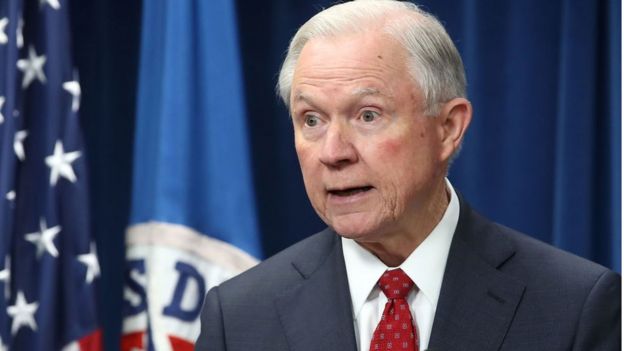
US Attorney General Jeff SessionsImage copyrightGETTY IMAGES
Image captionUS Attorney General Jeff Sessions said ZTE had lied to federal investigators

ZTE also made 283 shipments of mobile phones to North Korea despite knowing this contravened rules around exports to the country.
According to Reuters, ZTE buys around a third of its its components from US businesses such as Qualcomm, Microsoft and Intel. It also sells phone handsets to major carriers such as T-Mobile and AT&T.

'Lied to investigators'

US Attorney General Jeff Sessions said: "ZTE Corporation not only violated export controls that keep sensitive American technology out of the hands of hostile regimes like Iran's - they lied to federal investigators and even deceived their own counsel and internal investigators about their illegal acts."
He added: "This plea agreement holds them accountable, and makes clear that our government will use every tool we have to punish companies who would violate our laws, obstruct justice and jeopardise our national security."
The company reached the agreement with the US Justice, Commerce and Treasury departments.
As part of the deal, it must submit to a three-year period of probation, during which time it will be independently monitored to ensure it remains compliant.
Chairman and chief executive of ZTE, Zhao Xianming, said: "ZTE acknowledges the mistakes it made, takes responsibility for them and remains committed to positive change in the company."
"Instituting new compliance-focused procedures and making significant personnel changes has been a top priority for the company."

Monday, 6 March 2017

TAGGED UNDER:

Vauxhall-Opel sold by GM to Peugeot-Citroen

The French company that owns Peugeot and Citroen has struck a 2.2bn euro (£1.9bn) deal to buy General Motors' European unit, including Vauxhall.
GM Europe has not made a profit since 1999 and the deal has raised fears about job losses at Vauxhall.
The UK factories at Ellesmere Port and Luton employ about 4,500 people.
With GM's Opel and Vauxhall operations, PSA Group would become the second largest carmaker in Europe, behind Volkswagen.
In a statement, Carlos Tavares, chairman of PSA's managing board, said: "We are confident that the Opel/Vauxhall turnaround will significantly accelerate with our support, while respecting the commitments made by GM to the Opel/Vauxhall employees."
PSA said it would return Opel and its Vauxhall brand to profit, and expected to make savings of £1.47bn per year by 2026, with most of the cuts made by 2020.
Mr Tavares told the BBC that he trusted the Vauxhall staff to work in a "constructive manner" with PSA to improve their performance.
"As long as we improve the performance and we become the best, there is no risk they should fear."

'Day and night' fight

One worker at Vauxhall's Ellesmere Port plant in Cheshire told reporters this morning that they were "still in the dark" about jobs.
Another said: "I think the deal is good for current GM and Vauxhall employees, but is there a future for younger workers after 2021?"
Len McCluskey, general secretary of Unite, said that the union would continue to "work day and night" to fight for Vauxhall staff at plants at Luton and Ellesmere Port.
Thousands more workers are involved in Vauxhall's showrooms and supply chain.
"Our plants are the most productive in the European operation, the brand is strong here, the market for the products is here, so the cars must be made here.," Mr McCluskey said.
"But there is also a role for the government to play. The uncertainty caused by Brexit is harming the UK auto sector."

Brexit effect

Business Secretary Greg Clark said: "The Prime Minister and I have been in close contact with the PSA Group and General Motors and they have been clear this deal is an opportunity to grow the Vauxhall brand, building on their existing strengths and commitments.
"I have set out the government's determination to make the UK one of the world's most attractive locations for innovative future vehicle technology, including electric vehicles and battery technology - a key part of our modern Industrial Strategy."
But former Business Secretary Sir Vince Cable expressed concerns about jobs because of the government's "lack of commitment to the customs union and the single market".
"Car components have to go backwards and forwards across frontiers and they will acquire tariffs and checks.
"And Vauxhall is particularly is exposed to this, [as] about 80% of its exports are to the European Union.
"And if you're a hard-headed car executive looking at the competitiveness of Britain versus German plants, Britain, I'm afraid, is going to slip down the ranking in future."

'Big mess'

Prof Peter Wells of Cardiff Business School said: "PSA's Carlos Tavares has targeted savings of $2bn per annum so something has got to give.
"PSA will be inheriting quite a big mess, and out of that mess they are going to have to make something that is viable going forward."
GM chairman and chief executive Mary Barra said it had been a difficult decision to sell Opel and Vauxhall, and insisted the business would have broken even in 2016 had it not been for the UK's decision to leave the European Union, which caused a sharp drop in the value of the pound.

Simon Jack, BBC business editor

PSA Group says it will cut costs to increase profits, which has stoked concerns for more than 4,000 Vauxhall jobs in the UK.
The new owners met government and unions last week and provided assurance that existing production commitments would be honoured at Ellesmere Port till 2020 and Luton for some years beyond that.
However, it is generally accepted that the 24 factories the combined company will have in Europe is too many.
The deal is an exit from Europe for GM which has lost billions here since the turn of the millennium. It will allow them to focus on its home market of the US and its expanding operations in China.
PSA has said many countries are reluctant to buy French cars and the Opel brand will help them expand into new markets.
The chancellor will have extra motivation to be supportive of the car industry when he delivers Wednesday's Budget. He is expected to announce investment in skills, research and development around electric car technology in which PSA has so far lagged behind its rivals.

Friday, 3 March 2017

TAGGED UNDER:

Bitcoin value tops gold for first time

A unit of the digital cryptocurrency Bitcoin has exceeded the value of an ounce of gold for the first time.
It closed at $1,268 on Thursday while a troy ounce of gold stood at $1,233.
The current high is being attributed to surging demand in China, where authorities warn it is used to channel money out of the country.
The past months' surge is a major reversal for Bitcoin, which plummeted in value in 2014 after the largest exchange collapsed.
The value of Bitcoin has been volatile since it was first launched in 2009, and many experts have questioned whether the crypto-currency will last.
Earlier this year, Chinese authorities cracked down on Bitcoin trading in an attempt to stop money flowing out of the country illegally.
But the closer scrutiny from Beijing only briefly sent the currency lower. After it had soared to record highs in January, it has since picked its steady rise in value.
Bitcoin is attractive to some users because of its anonymity, as well as its lack of government control.
The website Silk Road was closed in 2013 following raids by the FBI and other agencies amid allegations of drug dealing. Authorities seized millions of dollars worth of Bitcoin during the raids.

How Bitcoin works

Bitcoin is often referred to as a new kind of currency. Yet like all currencies its value is determined by how much people are willing to exchange it for.
To process Bitcoin transactions, a procedure called "mining" must take place, which involves a computer solving a difficult mathematical problem with a 64-digit solution.

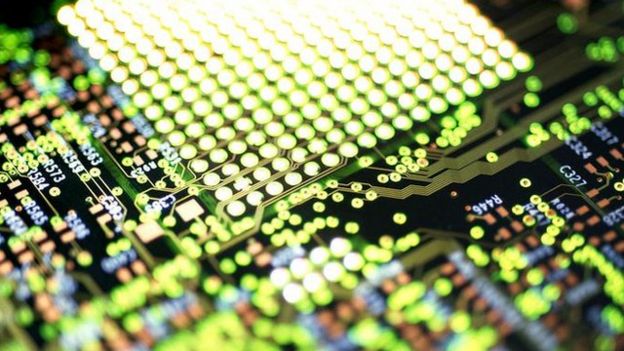
Computer circuit boardImage copyrightEYEWIRE
Image captionVerifying bitcoin transactions takes a lot of computer power

For each problem solved, one block of Bitcoins is processed. In addition the miner is rewarded with new Bitcoins.
To compensate for the growing power of computer chips, the difficulty of the puzzles is adjusted to ensure a steady stream of new Bitcoins are produced each day.
There are currently about 15 million Bitcoins in existence.
To receive a Bitcoin, a user must have a Bitcoin address - a string of 27-34 letters and numbers - which acts as a kind of virtual post-box to and from which the Bitcoins are sent.
Since there is no register of these addresses, people can use them to protect their anonymity when making a transaction.
These addresses are in turn stored in Bitcoin wallets, which are used to manage savings.

Wednesday, 11 January 2017

TAGGED UNDER:

Analysts warn pre-election populist decisions can derail economy (Pakistan)

KARACHI: The government’s soft-pedalling on the reforms it had promised four years back showed the economy is no more a priority ahead of 2018 polls as it offered a number of politically motivated incentives/amnesties to reflate the growth, analysts said on Wednesday, warning further stimuli will only put pressure on the country’s fiscal account.
“This is the pre-election year and the government needs policies and decision to strengthen its vote bank. Therefore, I do not see a tax-heavy budget or any significant rise in petroleum prices going forward,” Khurram Schehzad Chief Operating Officer at JS Global Capital said.
“We see slippages on the expenditure side vis-à-vis foreign debts even if the government opts for productive populists decisions such as the Rs180 billion export package announced quite recently.”
He explained that even if the government opts for infrastructure development alone or announces support packages for industry, the foreign/domestic debts are the only source to fund the same.
“Pakistan’s current account remains sensitive as a couple of repayments are due this year, while foreign direct investment (FDI) is low and export market has become quite competitive translating into limited support from export receipts,” Schehzad said.
He also pointed up the fact the Pakistan Muslim League-Nawaz (PML-N) regime is strained under unsuccessful tax amnesty schemes, while the collection targets remain grossly missed and now, another such reprieve is in the offing but it’s no use pinning hopes on any.
“Amnesty would not yield results unless availed. Besides, such decisions discourage honest taxpayers,” Khurram Schehzad added. Giving his viewpoint, Khawaja Amjad Waheed, CEO of NBP Fullerton Asset Management (NAFA) said,” The fiscal targets for the current year are set to be missed.”
“The targets will not be met due to slippages on the expenditures side amid higher spending by federal and provincial governments before next general elections scheduled in early 2018, no IMF oversight and government’s reluctance to implement further revenue mobilization measures because of election considerations”.
A report issued by Elixir Securities highlights several macro-economic challenges such as higher fiscal slippages on account of populist measures prior to election year, monetary tightening, resurgence in commodity prices, external account pressures emanating from surging current account deficit, flattish remittances and upcoming debt repayments.
On the external account front, Khawaja Amjad Waheed expects the current account deficit to widen in fiscal year 2016-17 due to higher imports especially plant/equipment and energy-related machinery, subdued exports and stagnating remittances.
“However, an overall balance of payments position is likely to remain comfortable on account of higher external loan inflows and some increase in FDI. Nonetheless, if remained unaddressed, the sluggish exports would eventually pose serious risks to medium-term balance of payments sustainability and threaten the recent economic gains”.
Ahmed Lakhani at JS Global Capital says a significant portion of an export package worth Rs180 billion was directed towards boosting the sector’s competitiveness, while its market share was constantly being gnawed away by the likes of Bangladesh and Vietnam with pro-export policies by their respective governments.
“To counter this trend, the government has provided a number of incentives to the textile sector, which will significantly benefit textile exports.” Taking a similar line, Arslan Hanif at Arif Habib Limited said,” The much awaited export package should help exporters reduce their cost of doing business and compete against regional peers.” 
“The textile package is a positive for the textile manufacturers and will push exporters to bring in additional USD proceeds, resulting in higher FX reserves in turn helping the USD/PKR dollar parity to remain stable.” However, analysts are unanimous that the looming macro-economic challenges are manageable and prospects for the domestic economy look upbeat in 2017.
Just to jog your memory, Pakistan’s economic performance has remained fairly robust in 2016 mainly supported by the favorable global economic environment and partially due to some economic reforms measures undertaken by the government under the IMF program.
Gross Domestic Product (GDP) growth reached an eight year high of 4.7 percent; external account position remained comfortable, as captured in healthy foreign exchange reserves accumulation though primarily on the back of fresh loans and a stable exchange rate; inflation averaged at around 3.7 percent during 2016 mainly helped by the steep fall in global oil prices, which allowed central bank to continue with its accommodative monetary policy; and fiscal deficit stayed contained, narrowing to 4.6 percent of GDP during the last fiscal year.

Proudly Powered by Blogger.